What is bonded non-woven fabric?
You hear the term "bonded non-woven," but it's unclear. Does it mean it's glued? Strong? This confusion makes it hard to choose the right material for your specific need.
Bonded non-woven fabric is a sheet made from loose fibers that are "bonded" or locked together into a stable fabric. The three main bonding methods are thermal (heat), chemical (adhesives), and mechanical (tangling), and each method creates a completely different material.
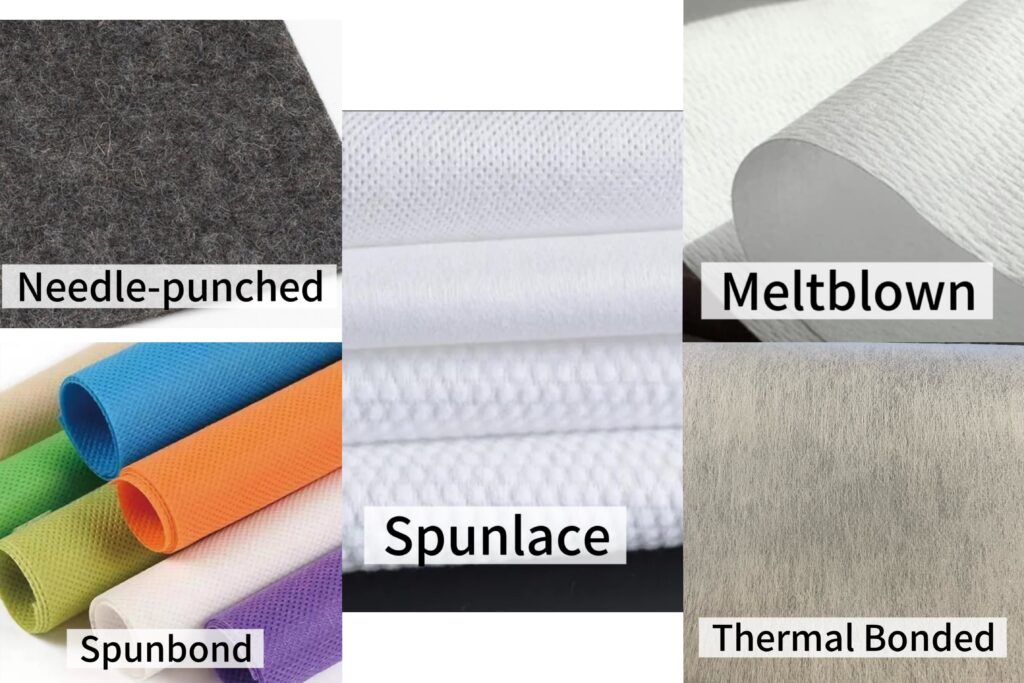
When I first started in this industry, the term "bonded" was a bit of a mystery to me too. It sounds so simple, but it's the most critical step in making a non-woven fabric. You start with a loose web of fibers, which is fragile, like a piece of cotton batting. The bonding process is what transforms that delicate web into a useful, durable fabric. The method you choose is everything—it defines the fabric's final character, from its softness and strength to its purity and what it can be used for. Let's look at the main ways this is done.
How does thermal bonding create a clean fabric?
You need a fabric for a sensitive application like food packaging or hygiene products. You're worried about chemical residues from glues or binders contaminating your product or causing irritation.
Thermal bonding uses heat to melt and fuse special low-melt fibers within a web. This process locks all the fibers together into a stable sheet without using any chemical adhesives, resulting in a pure, clean, and recyclable fabric.
This is the method we specialize in at Golden Lily, and I believe it's one of the cleanest ways to make a non-woven fabric. The magic is in the raw materials we use. We create a blend of standard polyester fibers for strength and special bicomponent fibers1. These bicomponent fibers have a core with a high melting point and an outer sheath with a low melting point.
The Process Step-by-Step
- Web Formation: We first arrange this fiber blend into a uniform, fluffy web.
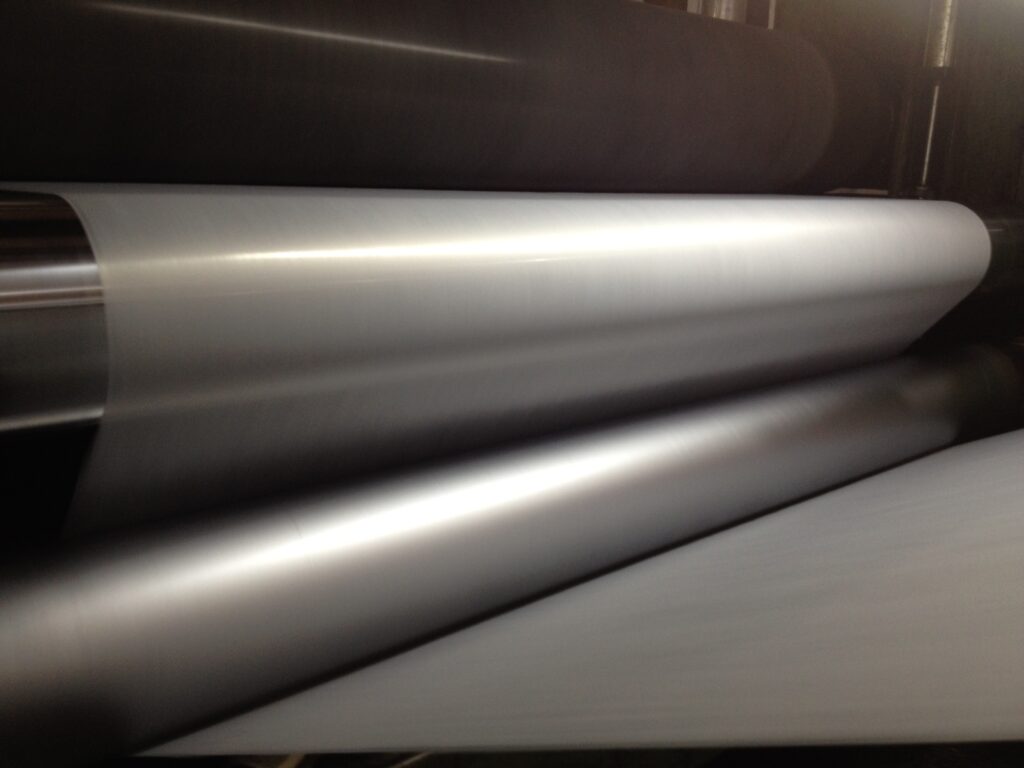
- Heating: The web passes through large, heated rollers. The temperature is precisely controlled to melt only the outer sheath of the bicomponent fibers.
- Fusing & Cooling: The melted sheaths act like millions of tiny glue spots. As the web cools, these spots solidify, bonding the entire fiber structure together.
Because the "glue" is part of the fiber itself, we don't need to add any external chemical binders. This makes the final fabric incredibly pure, which is why it's a top choice for garment interlinings, food-safe packaging like tea bags, and the skin-contact layers in hygiene materials.
What is chemical bonding in non-wovens?
You need a non-woven fabric with high stiffness and strength at a low cost. You're exploring options, and you see materials that feel crisp and paper-like, wondering how they are made.
Chemical bonding involves spraying or saturating a fiber web with a liquid adhesive binder, such as acrylic or latex. The web is then dried and cured in an oven, which hardens the binder and locks the fibers in place.
This method is very common and has been used for a long time. It’s an effective way to create strong, stable fabrics. The process is a bit like paper-mâché. You start with your loose web of fibers, and then you apply a liquid adhesive. This can be done by spraying it on, passing the web through a bath of the binder (saturation bonding), or even printing the binder on in a specific pattern (print bonding).
After the binder is applied, the wet web moves through a large oven. The heat cures the adhesive, evaporating the water and causing the chemical binder to cross-link and form a rigid matrix around the fibers. This method is great for producing stiff and durable materials used in applications like disposable wipes, interlinings, and some filtration media. However, the presence of the chemical binder changes the fabric's properties. It makes it less soft, affects its drape, and means the final product is a composite of fibers and chemicals, which can be a concern for certain applications and for recyclability.
When is mechanical bonding the right choice?
You need a thick, dense, and highly durable fabric, something that feels more like felt than paper. The applications require high resilience and the ability to handle abrasion and stress.
Mechanical bonding is used when you need a thick, felt-like material. This process uses physical force, not heat or glue, to entangle the fibers together. The most common methods are needle-punching and hydroentangling (spunlace).

Mechanical bonding is fundamentally different because nothing is melted or glued. Instead, it relies on brute force to get the job done. Think of it like making felt by hand, but on a massive industrial scale.
The Two Main Methods:
- Needle-Punching: This is the most common method. The loose fiber web is passed under a board containing thousands of special barbed needles. These needles punch up and down through the web at high speed. The barbs grab fibers on the way down and pull them through the web, physically tangling them together. Repeating this thousands of times creates a dense, strong, and thick fabric. This is how materials for automotive carpets, geotextiles (for construction and erosion control), and industrial felts are made.
- Hydroentangling (Spunlace): This method uses extremely high-pressure, needle-thin jets of water to tangle the fibers. The force of the water jets acts like tiny needles, wrapping and knotting the fibers around each other. This process creates a very soft, drapable, and strong fabric without any binders, making it perfect for products like medical wipes, cosmetic pads, and surgical gowns.
Conclusion
"Bonded non-woven" refers to how fibers are held together. The choice between thermal (heat), chemical (glue), or mechanical (tangling) bonding is what defines the fabric’s final properties and its best use.
- Explore this link to understand the unique properties and uses of bicomponent fibers in various industries. ↩
Li Sun
With over 15 years of experience in non-woven fabric manufacturing, I lead our R&D team at Hangzhou Golden Lily. My expertise includes developing innovative filtration materials and sustainable packaging solutions.